
A condition survey is a structured inspection of a building. It records what the building is, what condition it is in, what is going wrong and why, and what to do about it, graded by urgency. For a listed building, it is the ordinary starting point of conservation work, and typically the first step in almost every commission.
Crowstep Conservation carries out condition surveys of listed and traditional buildings across Scotland.
Done well, it is not a one off exercise. It is a management tool that feeds into maintenance planning, prioritised repair, and preventive conservation over the life of the building.
Understand before you disturb
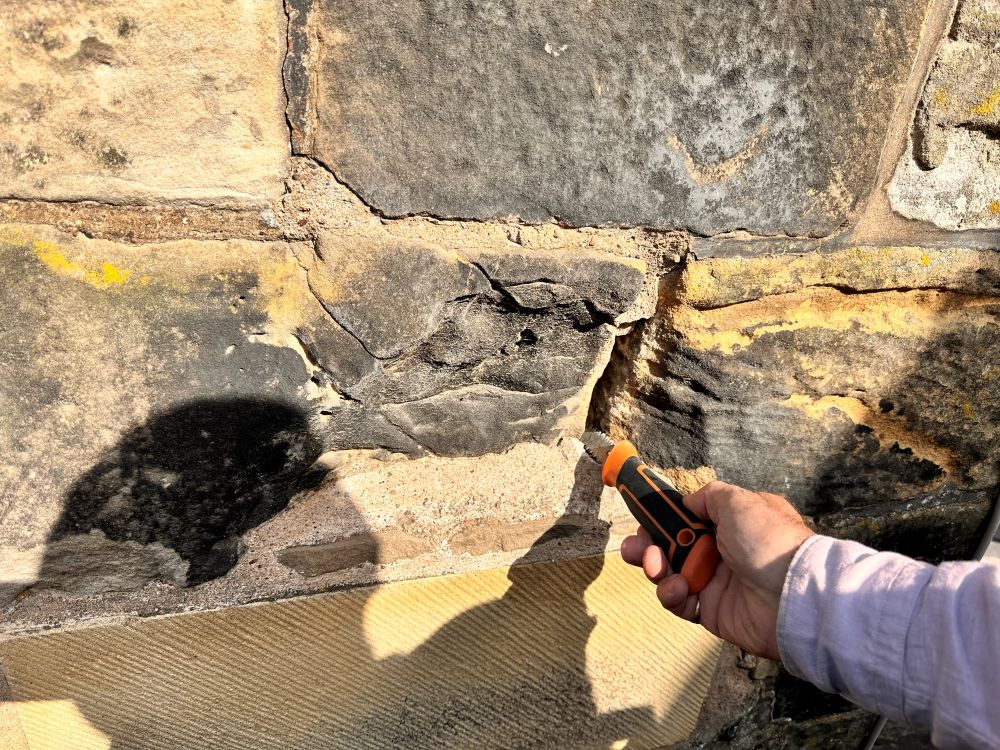
The governing principle of a condition survey is straightforward: investigate before you intervene. Diagnosis begins with the eyes and with non destructive methods, and only moves to more invasive investigation where those methods cannot answer the question.
This matters because much sound fabric has historically been removed on a false presumption of defects. Plaster hacked off, panelling cut through, or masonry opened up before the cause of a problem is understood destroys evidence and authenticity that cannot be replaced. In a listed building, that evidence is often part of what makes the building significant, so a condition survey exists to prevent that kind of guesswork before it happens.
A survey identifies that something is wrong and establishes the likely cause. It records symptoms, but its purpose is to find causes. Water is usually the culprit, and its source is often higher up or remote from the visible damage. A stain on an internal wall may originate at a parapet gutter several metres away. Where the cause is not immediately evident, the correct response is further targeted investigation, not a guess dressed up as a finding.
How the survey is structured
A thorough condition survey follows a consistent structure.
The work begins with planning and preparation: agreeing scope with the client, assembling existing information about the building, including its listing description, history and any record of past works, and confirming that the person carrying out the survey has the right combination of architectural, historic, structural and conservation knowledge for what the building requires. Understanding what matters about the building, and why, shapes everything that follows.
Inspection is then carried out systematically, and always starts where failure starts. Roof coverings, flashings, parapets and rainwater goods are examined first, since defects here are the most common source of problems elsewhere in the building. The inspection then works through the walls, openings, interiors, roof space, sub floor voids and services in turn. Safe access is arranged wherever it is needed, whether that means a ladder, a mast camera, or scaffolding.
Findings are recorded element by element, using a consistent condition classification and supported by photographs. This is what makes a report usable over time, allowing one survey to be compared against the next. Each defect is also assessed as active or dormant, since this changes its urgency considerably. A dormant crack from historic settlement is a different problem to an active one still moving.
Diagnosis follows, and this is where the real work of the survey lies. The aim is to find the cause, not just describe the symptom. Non destructive investigation techniques, such as thermography, endoscopy, micro drilling or ground penetrating radar, are used before any opening up of the fabric. Destructive investigation is only justified where non destructive methods cannot resolve the question, and even then it is targeted and limited. Where the cause of a defect genuinely cannot be established from the survey, the honest recommendation is further investigation, not a conclusion reached by guesswork.
Risk is then assessed separately from condition. A minor defect close to a significant interior can outrank a major defect in a robust outbuilding, so recommendations are graded by urgency rather than by the apparent severity of the defect alone. Preventive measures are also distinguished from repairs, since not every finding calls for the same kind of response.
What the report contains
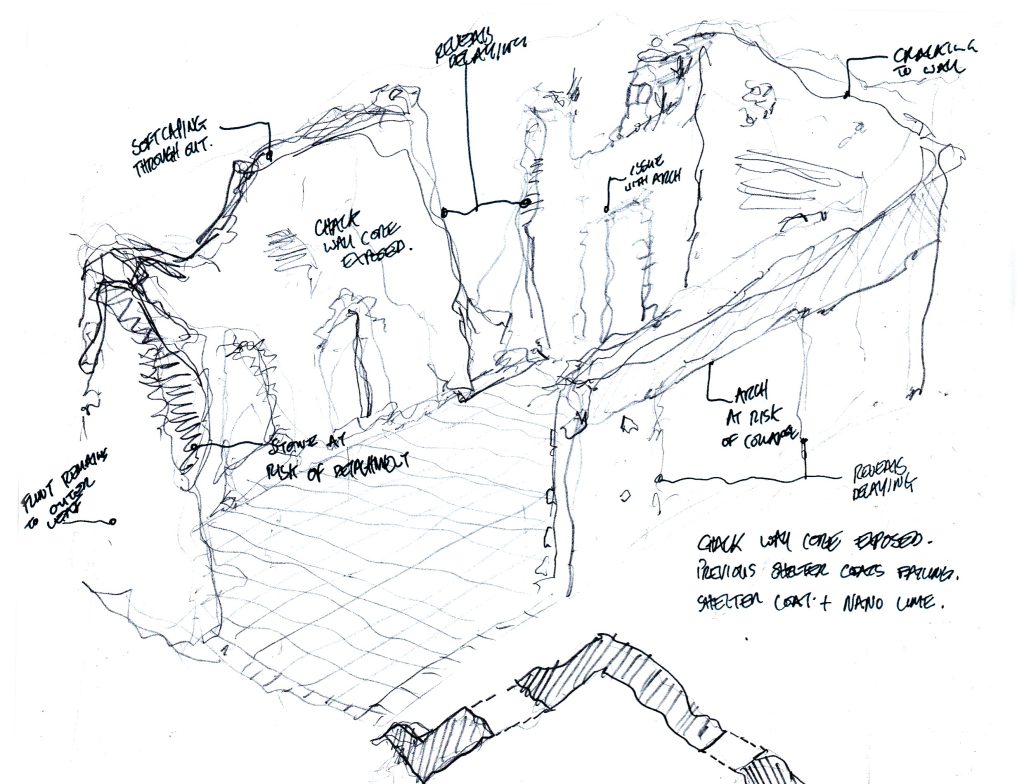
The condition report itself follows a consistent structure. It records the property and heritage information relevant to the building, including its identification, description, protection status and sources consulted. It sets out condition element by element, with a consistent classification and supporting photographs or sketches. It presents a risk assessment, covering cause, consequence and urgency, alongside a prioritised list of recommended action. It closes with a summary, giving an overall recommendation and identifying anything that needs further investigation.
The overall condition of the building is graded, typically ranging from no measures needed, through routine maintenance and preventive conservation, to moderate repair requiring further investigation, up to major intervention based on diagnosis. Individual recommendations carry their own urgency grading, from long term items through to those needing urgent and immediate attention. This gives an owner a clear, evidence based basis for deciding what to do first, rather than an undifferentiated list of problems.
An ongoing role, not a single event
A condition survey is most useful when it is tied to a maintenance cycle rather than treated as a one off check. The conservation norm is a quinquennial inspection, repeated every five years, so that condition can be tracked over time and small problems addressed before they become large ones. A survey with no follow through misses much of its value.
A condition survey is the point at which an assumption about a building becomes an understanding of it. Everything that follows, from repair strategy to specification to a listed building consent application, is built on what it establishes.
Crowstep Conservation carries out condition surveys for listed and traditional buildings as part of the Diagnosis stage of work, for owners, estates, trusts and institutional clients across Scotland. If you are considering a condition survey for a listed building you own or are looking to buy, you can read more about how this work is scoped on the Services page, or get in touch to discuss a commission.
Ashley Turner is a conservation architect based in Edinburgh. Related reading: What is a listed building? and what conservation architects actually do.